


Eco-Friendly Outdoor Products
for Patios, Porches, Backyards & Gardens
The best outdoor spaces should feel comfortable, useful, and easy to enjoy. Eco-friendly outdoor products and sustainable outdoor accessories bring balance to patios, porches, backyards, and gardens—adding warmth, texture & functionality to everyday outdoor living.


YOU MIGHT ALSO LIKE:








What Makes Outdoor Products Eco-Friendly and Sustainable?
Eco-friendly outdoor products and sustainable outdoor products are usually defined less by one perfect label and more by a combination of material choices, long-term durability, and more thoughtful design. In outdoor spaces, products have to do more than look good at first glance. They need to handle sun, moisture, changing temperatures, and repeated use without feeling flimsy or short-lived. That is why many shoppers gravitate toward outdoor accessories made from more durable, reusable, and easier-to-understand materials rather than overly disposable or trend-driven alternatives.
The best eco-friendly outdoor products usually share a few important qualities:
This is one reason sustainable outdoor accessories, eco-friendly outdoor gear, and eco-conscious outdoor living products often overlap. Some terms lean more toward sustainability and longevity, while others speak more to lifestyle, function, or lower-impact material choices. In practice, the best options usually combine everyday usefulness with durability and a design that still feels relevant seasons later. For most homes, sustainability starts with choosing outdoor pieces you actually want to keep.
Why Choose Sustainable Outdoor Products for Everyday Living?
Outdoor accessories shape how a space feels just as much as larger pieces like seating or dining furniture. Lanterns, throws, rugs, trays, storage pieces, and decorative accents can make a patio or backyard feel more finished, more comfortable, and more inviting to use regularly. The right eco-conscious outdoor living products also help outdoor spaces work harder by making them easier to relax in, entertain in, and maintain over time. Even relatively small additions can change whether a space feels welcoming or unfinished.
There are several reasons people prioritize eco-friendly outdoor products and sustainable outdoor accessories:
-
to avoid "disposable" seasonal décor
-
to choose long-lasting outdoor pieces
-
to build a functional, comfy space
-
for an intentional look across patios & gardens
-
to support everyday living instead of one-time styling
Sustainable outdoor products can also make it easier to think of outdoor space as a real extension of the home. A lantern by the seating area, a throw for cool evenings, a rug that softens a patio surface, or a durable tray for outdoor meals all help turn a space into somewhere people genuinely want to spend time.
When these items are selected thoughtfully, they also help reduce the cycle of rebuying low-quality outdoor gear every season. In many homes, that mix of beauty and practicality is what makes outdoor living feel worth the effort.

Practical Tips for Choosing Sustainable Outdoor Accessories That Hold Up
Start With the Way You Actually Use the Space
Before choosing outdoor accessories, think about what really happens in the space day to day. Some patios are mostly used for dining, some backyards are centered around lounging or hosting, and some porches mainly serve as a quiet place to sit at the end of the day. That use pattern should guide which eco-friendly outdoor products matter most. A beautiful lantern or tray is much more valuable when it fits the way you already live outside.
This first step helps keep the category from feeling too broad or purely decorative. Instead of buying a little bit of everything, you can focus on sustainable outdoor products that solve real needs in the space. That might mean better lighting, softer layering, portable serving pieces, or storage that helps outdoor items stay organized. A more grounded outdoor setup usually starts with function, not impulse.
Choose Materials That Make Sense Outdoors
Outdoor spaces ask more of accessories than indoor rooms do, so material choice matters a lot. Stone, teak, metal, bamboo, recycled glass, rope, and other sturdier materials often make more sense outside than overly delicate or highly synthetic pieces that deteriorate quickly. The best eco-friendly outdoor gear is usually built from materials that can handle the environment while still feeling intentional and attractive. This becomes especially important if the space is exposed to sun, humidity, rain, or frequent temperature swings.
A better material choice can also make the whole space easier to maintain. Durable outdoor accessories are less likely to become immediate replacements, which supports the sustainability side of the decision as well as the practical one. When you choose materials that age well, the outdoor space tends to look more grounded over time. In many cases, the most sustainable product is simply the one that still works beautifully next year.
Think About Storage Before You Buy Smaller Pieces
Outdoor accessories are easier to enjoy when they have a realistic place to go when not in use. Smaller pieces like throws, lanterns, tabletop items, and serving accessories tend to work best when there is some built-in plan for where they live between uses or during bad weather. This is one of the easiest ways to avoid outdoor clutter and protect the products you buy. A good storage plan often makes the whole space feel calmer and more intentional.
This matters because even eco-conscious outdoor living products perform better when they are cared for appropriately. If accessories are constantly left exposed or piled in a way that damages them, they are more likely to wear out faster. Thinking ahead about baskets, shelves, covered storage, or nearby organization can extend the life of what you buy. Sustainability is often tied just as much to maintenance as it is to materials.
Use Accessories to Add Comfort, Not Just Decoration
The most successful outdoor accessories usually improve how the space feels to use, not just how it looks in photos. A throw blanket can make evening seating more comfortable, a lantern can extend time outside after sunset, and an outdoor rug can soften hard surfaces underfoot. These kinds of products help a space function better while still contributing to the overall design. That makes them much easier to justify than purely decorative items with no real purpose.
This is where sustainable outdoor accessories often outperform trend-driven outdoor décor. When every piece earns its place through comfort or utility, the space feels more personal and more lived-in. It also means fewer one-season purchases and fewer products that end up forgotten. The best outdoor living products often succeed because they quietly make the space more usable.
Buy Fewer, Better Pieces Instead of Seasonal Filler
Outdoor categories can make it easy to buy quickly and replace often, especially when products are marketed around seasonal refreshes. A stronger long-term approach is to choose fewer accessories that are sturdy, versatile, and likely to work with your space for years. This helps reduce visual clutter and usually results in a more cohesive outdoor setup. It also supports the core idea behind sustainable outdoor products.
In practice, a few strong pieces tend to do more than a large mix of filler. One well-made lantern collection, one durable outdoor rug, or one set of serving pieces you use repeatedly can shape the space more effectively than a pile of trendy extras. Better buying decisions often come from slowing down and thinking in layers. Outdoor spaces usually feel more elevated when they are edited instead of overfilled.
Let Maintenance Shape Your Decisions Early
Every outdoor product comes with some level of care, and that care should fit your real habits. If you do not want to bring multiple pieces in and out constantly, choose items that can handle more exposure. If you know you will rotate or store pieces seasonally, you may have more flexibility with materials and finishes. Maintenance is not a separate consideration from style. It is part of what makes outdoor accessories either satisfying or frustrating to own.
This is especially important when shopping for eco-friendly outdoor gear with long-term use in mind. Products that are too high-maintenance for your routine often become short-term purchases, no matter how beautiful they are. On the other hand, accessories that fit naturally into the way you care for the space tend to last longer and feel more worthwhile. Good outdoor design always works better when it is realistic.
Designer Tips for Styling Eco-Conscious Outdoor Living Products
Build the Space Around One or Two Core Functions
A patio or backyard tends to feel stronger when it is designed around a clear purpose. That purpose might be outdoor dining, quiet lounging, reading, entertaining, or some mix of those, but it helps to prioritize one or two main uses before layering in accessories. Once the function is clear, it becomes easier to choose eco-friendly outdoor products that support it naturally. The space will usually feel more intentional and less scattered as a result.
This also creates a better foundation for styling. Instead of treating accessories like random add-ons, you begin to see them as tools that support the way the area is meant to feel and function. That could mean lighting for evening gatherings, soft textiles for comfort, or trays and tabletop pieces for outdoor meals. A more purposeful setup almost always looks better in the end.
Let Lighting Shape the Mood After Sunset
Good outdoor lighting is one of the fastest ways to make a space feel more inviting. Lanterns, rechargeable lamps, and string lights can all add warmth and extend how long you actually want to stay outside. Sustainable outdoor accessories that improve evening use often deliver more value than people expect because they change the usable hours of the space. They also help the outdoor area feel more finished without needing major structural updates.
This is where internal links can work naturally in the page. Shoppers looking for eco-friendly outdoor products may also want to browse natural outdoor lighting and lanterns to build out the atmosphere of the space. Lighting often does as much for outdoor comfort as furniture does. A few thoughtful pieces can shift the tone of the whole patio.
Use Soft Layers to Make Hard Surfaces Feel More Inviting
Most outdoor areas rely on hard materials like concrete, decking, brick, or stone. Accessories are what keep those surfaces from feeling too stark or unfinished. Throws, rugs, cushions, and other softer touches can make the space feel warmer and more usable, especially in mornings, evenings, or shoulder seasons. That softness helps outdoor living feel closer to the comfort of an indoor room.
Layering also makes outdoor spaces feel more intentional without requiring a lot of pieces. One rug and one blanket can change the feeling of a seating area dramatically. Readers interested in continuing that softer approach may also want to explore natural outdoor rugs as part of a more cohesive setup. The right layer can make the space feel complete instead of temporary.
Repeat Natural Materials for a More Cohesive Look
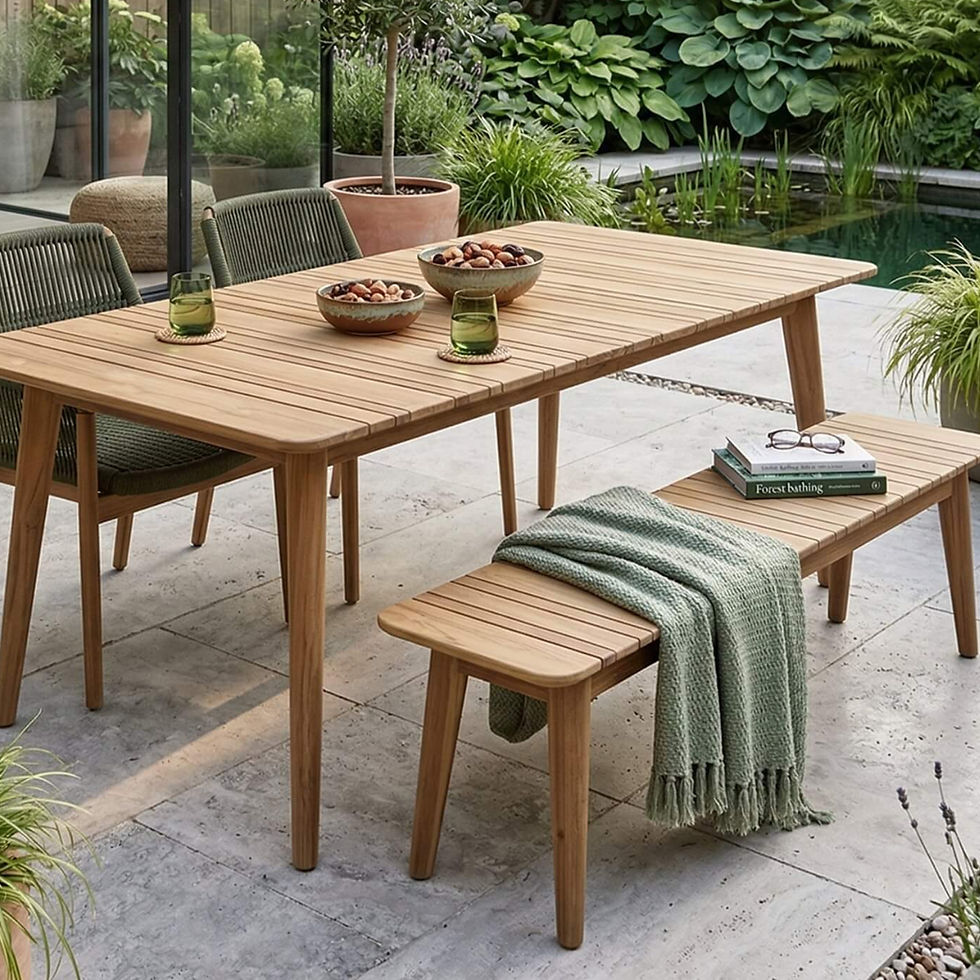
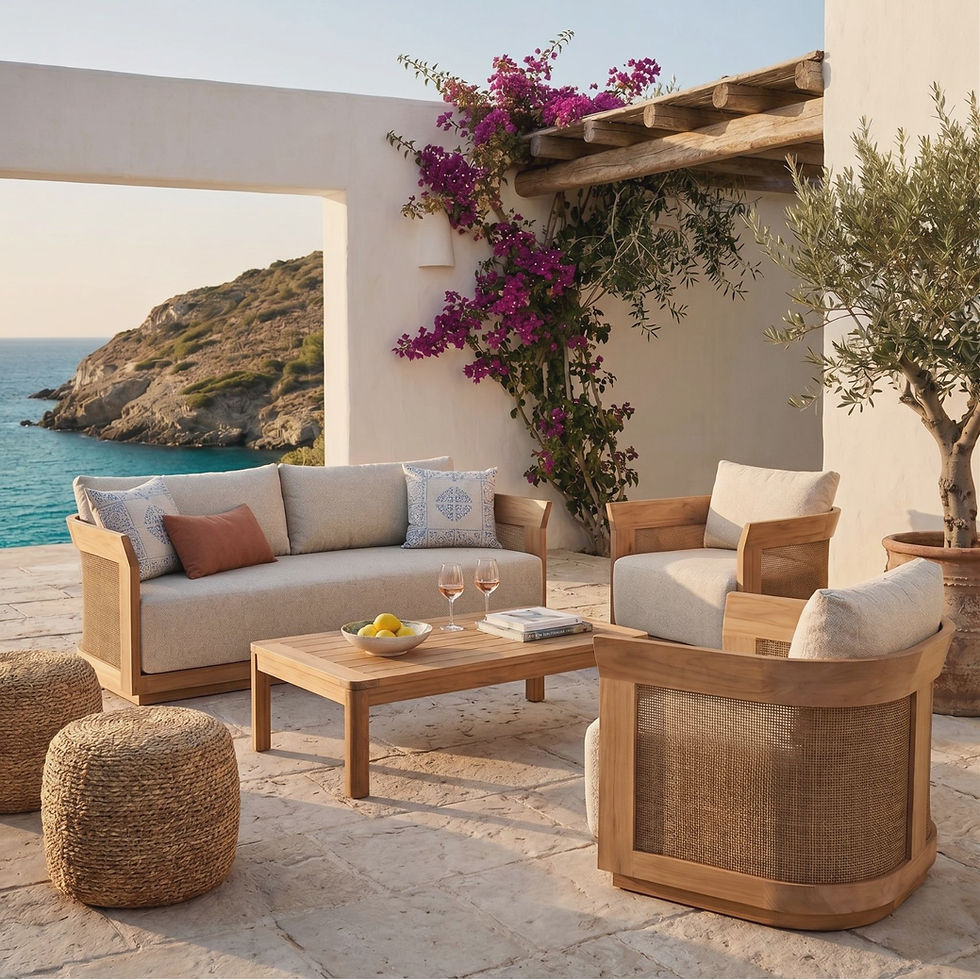
Outdoor spaces often feel calmer when a few material themes repeat throughout them. Teak, rope, recycled glass, metal, ceramic, and woven elements can all work together when the mix is restrained and intentional. Repeating those materials in small accessories helps connect the space visually without making everything match too perfectly. That kind of consistency often looks more elevated than a wider, more random mix.
This is especially helpful if you are building around existing outdoor seating or tables. Smaller sustainable outdoor accessories can echo what is already there and make the larger pieces feel more integrated. That kind of repetition also supports long-term flexibility because natural materials tend to pair well with future additions. Outdoor design often feels best when it builds rhythm instead of visual noise.
Link Accessories to the Larger Outdoor Setup
Accessories usually work best when they are styled as part of a larger outdoor environment rather than treated as standalone décor. A lantern makes more sense near a seating group, a tray feels more useful near dining or drinks, and a blanket becomes more inviting when it is placed where evening temperatures actually drop. Thinking this way makes eco-conscious outdoor living products feel more purposeful and more connected to the overall layout. It also helps avoid decorative clutter.
This is another place where related internal links fit naturally. Readers shopping for sustainable outdoor accessories may also want to browse sustainable outdoor furniture to think about how accessories relate to the larger pieces in the space. When the furniture and accessories work together, the entire area feels more considered. Good styling usually comes from relationships between pieces, not just the pieces themselves.
Build the Space Around Long-Term Enjoyment
The strongest outdoor spaces are usually the ones that still feel good after the season changes. That means choosing accessories that support comfort, function, and a quieter sense of style rather than buying for a short-lived trend. Eco-friendly outdoor products often perform best when they are selected for long-term enjoyment and regular use. The goal is a space that keeps inviting you back, not one that feels overdone by next year.
This is the wrap-up principle behind the whole page. Sustainable outdoor accessories work best when they help the outdoor area feel easier to enjoy, easier to maintain, and more consistent with the rest of the home. Whether you are focused on eco-friendly outdoor gear, eco-conscious outdoor living products, or a smaller collection of sustainable outdoor products that simply wear well, the idea is the same. Outdoor living becomes more rewarding when the details are chosen to last.
FAQs About Sustainable Outdoor Accessories:
What makes outdoor products eco-friendly?
Eco-friendly outdoor products are usually designed with a mix of durability, more thoughtful materials, and longer-term usability in mind. Instead of being made for short-term seasonal turnover, they are often built to keep functioning and looking good through repeated outdoor use. Materials, construction quality, and versatility all play a role in whether a product feels genuinely sustainable or just marketable. In most cases, the strongest choices are the ones that reduce the need for frequent replacement.
That is why it helps to look beyond the label and think about how the product will actually perform in your space. A lantern, rug, or tray that lasts for years and gets used often is usually a more eco-friendly choice than a cheaper product that quickly wears out. Durability is a big part of sustainability outdoors. Products become more responsible when they are made to stay useful.
What are the best sustainable outdoor accessories to start with?
For most homes, the best place to start is with a few pieces that improve both function and comfort right away. Lighting, rugs, throws, trays, and practical storage accessories tend to make an outdoor space feel more finished without requiring a full redesign. These kinds of items are also easier to choose thoughtfully because their purpose is clear. They help the space feel more inviting while still earning their place.
The best starting point depends on how you use the area now. If you spend evenings outside, lighting may matter most. If the patio feels visually cold or hard underfoot, a rug or textile layer may have a bigger effect. Sustainable outdoor accessories work best when they solve an actual need in the space rather than being added just to fill it.
How do I make my outdoor space feel more sustainable without redoing everything?
You do not need to replace an entire patio or backyard setup to make it feel more sustainable. In many cases, the easiest approach is to add or swap in a few better-quality outdoor accessories that improve comfort and reduce the need for short-term seasonal purchases. A well-made lantern, a durable rug, or a serving piece you use regularly can make the whole space feel more intentional. Small upgrades often have a bigger visual and practical impact than people expect.
This kind of gradual approach also tends to lead to better decisions. Instead of buying everything at once, you can build the space around what is actually missing and what you know you will use. That often results in fewer regrets and a more coherent look over time. Sustainable outdoor products are usually most successful when they are layered in thoughtfully.
Are eco-friendly outdoor products durable enough for weather exposure?
Many are, but the right choice depends on the specific material and how exposed the area is. Outdoor products made from teak, metal, recycled glass, rope, concrete, and other sturdier materials are often better suited to changing conditions than more delicate or short-term products. Still, even durable items usually last longer when they are used with some attention to placement and care. Weather resistance and longevity tend to improve when products are chosen for the actual conditions of the space.
It also helps to think about maintenance before you buy. Some outdoor accessories are fine with regular exposure, while others are better brought in, covered, or stored between uses. The most durable product is not always the one that can be ignored completely. It is the one that fits your climate and your maintenance habits well enough to stay in good shape.
What other categories pair well with sustainable outdoor accessories?
Outdoor accessories usually make the most sense when they are connected to the larger outdoor setup. Lighting, rugs, and furniture are often the most natural companion categories because they shape how the space feels and how it is used. If you are already shopping for sustainable outdoor accessories, it may also help to browse sustainable outdoor furniture, natural outdoor lighting and lanterns, and natural outdoor rugs. Those categories tend to work together naturally.
Thinking in connected categories also makes the design process easier. Instead of treating each purchase as separate, you begin to build a more cohesive outdoor environment. That often leads to better material repetition, better function, and a stronger overall look. In many homes, that layered approach is what turns an outdoor area into a real living space.